


Company News
Mar 25,2026
By:Circor
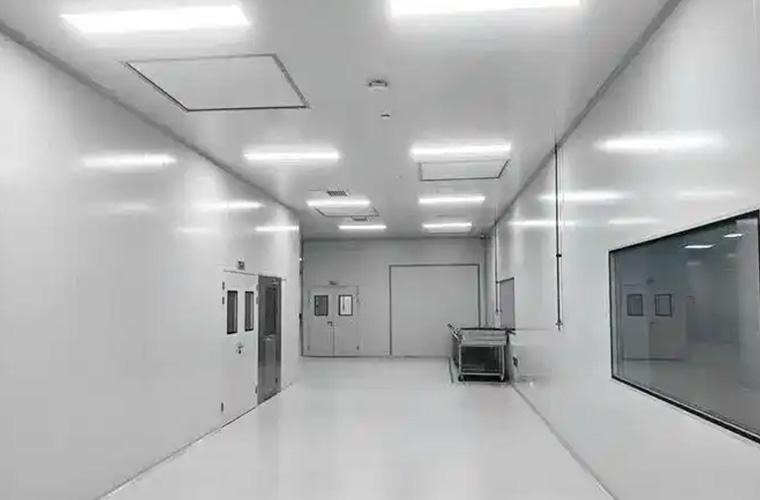
In the manufacturing process of electronic chips, achieving nanoscale micro-contamination control is the core challenge for low-humidity purification workshops. This requires the comprehensive application of five key strategies: precise regulation of environmental parameters, construction of a multi-level filtration system, adoption of unidirectional airflow organization, promotion of material and equipment innovation, and implementation of intelligent monitoring and preventive maintenance. These strategies work together to meet the extremely high cleanliness requirements of nanoscale processes.
01 Nanoscale micro-pollution control strategy
Fine regulation of environmental parameters
In the manufacturing process of electronic chips, the primary task for achieving nanoscale micro-pollution control is the precise regulation of environmental parameters. This involves not just managing humidity or temperature individually, but rather the coordinated control of humidity and temperature within the overall environment. Through precise regulation, the humidity and temperature within the workshop are maintained at optimal levels, thereby providing a stable and clean environment for nanoscale processes.
1. Humidity regulation: Maintaining a low humidity environment is crucial in the chip manufacturing process. It effectively prevents oxidation or moisture adsorption on the chip surface, thereby reducing the defect rate. Especially in key processes such as lithography and etching, even minor fluctuations in humidity can lead to mask deformation or abnormal chemical reaction rates. Therefore, humidity deviations must be strictly controlled within ±1% relative humidity (RH). In some high-precision workshops, this requirement is even more stringent, reaching ±0.5%RH. Through advanced equipment such as rotary dehumidifiers and refrigerated dehumidifiers, combined with intelligent temperature and humidity control systems, precise adjustment and stable maintenance of humidity can be achieved.
2. Temperature Stability: Even minor fluctuations in temperature can have a significant impact on chip manufacturing. To ensure the accuracy of manufacturing equipment and the stability of material properties, temperature fluctuations must be controlled within ±0.1℃. For instance, a certain chip manufacturing company successfully increased the chip yield by 20% by maintaining the workshop temperature at 22±1℃ and the humidity at 45%±3%RH.
Multi-stage filtration system
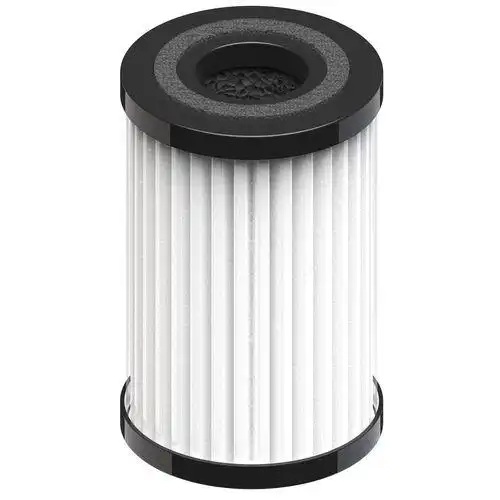
In the chip manufacturing environment, a multi-stage filtration system is an indispensable component. It effectively intercepts particulate matter and gaseous molecular pollutants in the air, providing a clean air environment for nanoscale processes. By utilizing different levels of filters, such as High-Efficiency Particulate Air (HEPA) filters and activated carbon filters, combined with a reasonable airflow organization design, effective control of particulate matter and gaseous pollutants can be achieved.
1. Particulate Matter Filtration: Through a three-stage filtration system consisting of pre-filters, medium filters, and high-efficiency filters (HEPA/ULPA), particles of 0.3 μm and above are filtered with an efficiency of at least 99.97% (ULPA filters achieve an efficiency of up to 99.9995%). In core process steps such as lithography and etching, laminar flow hoods or mini-environments are used to construct ISO 3-5 clean areas, ensuring that these critical processes are not affected by any contamination.
2. Control of Airborne Molecular Contaminants (AMC): For acidic gases such as HF and HCl, alkaline gases like NH₃, and organic volatiles like VOCs, activated carbon filters are used for adsorption, and catalytic oxidation technology is employed to convert them into harmless substances. For instance, molecular sieve filters utilize zeolite molecular sieves with a pore size of 0.3 nanometers to selectively intercept specific pollutants like ammonia, meeting the stringent requirements of advanced manufacturing processes for AMC concentrations not exceeding 1 ppb.
Unidirectional airflow organization
1. Vertical unidirectional flow system: This system features high-efficiency filters installed on the ceiling, supplying air downwards at a speed of 0.3-0.5 m/s, thereby creating a uniform and stable airflow field. The floor is designed with grilles or perforations to effectively expel contaminated air through the return air vents. Through Computational Fluid Dynamics (CFD) simulation technology, the layout of the air supply outlets is optimized to ensure that the wind speed deviation within the workshop is controlled within ±15%, thus avoiding local airflow turbulence.
2. Pressure difference gradient control: To ensure that airflow remains unidirectional at all times and prevent external contamination from infiltrating, a pressure difference of at least 10 Pa should be maintained between the clean zone and the non-clean zone, while a pressure difference of at least 5 Pa should be maintained between adjacent zones with different cleanliness levels. For example, Samsung's 3-nanometer production line employs intelligent variable-frequency fans that can adjust air volume in real time to ensure the stability of laminar flow.
Material and equipment innovation
In the semiconductor manufacturing process, the selection of materials and equipment is crucial for reducing the risk of secondary pollution. Through continuous innovation and optimization of materials and equipment, the cleanliness and efficiency of production can be further improved. For example, the adoption of new types of high-efficiency filters and intelligent control systems can better control airflow and pressure differences, thereby ensuring the stability and reliability of the production environment. At the same time, by introducing advanced detection and monitoring technologies, any abnormalities in the production process can be monitored in real-time, and measures can be taken promptly to address and correct them.
1. Selection of low-leaching materials: To minimize the leaching of metal ions, stainless steel or Teflon coating is commonly used for walls and ceilings, while epoxy resin or PVC rolls are chosen for floors. Additionally, sealants are formulated with low volatile organic compounds (VOCs) to avoid chemical pollution. On the casings of core equipment such as lithography and etching machines, 316L stainless steel or PFA coating is typically applied to reduce the risk of particle shedding.
2. Application of nanofiber filter material: The single diameter of nanofibers is only 50-200 nanometers, and the pores between fibers are even smaller, which enables them to intercept smaller particles. At the same time, due to the significant increase in fiber surface area, the dust holding capacity is increased by 5 times, thereby extending the service life of the filter to up to 8 years. For example, after Intel adopted nanofiber filter material in its Arizona factory, the operation and maintenance costs were significantly reduced by 40%.
Intelligent monitoring and preventive maintenance
In the semiconductor manufacturing process, intelligent monitoring and preventive maintenance are particularly crucial. Through real-time early warning systems, potential risks can be promptly identified and addressed, ensuring the stability of the production environment and the quality of products. Simultaneously, the implementation of preventive maintenance strategies can reduce equipment failure rates, extend equipment lifespan, and subsequently lower production costs. These measures collectively constitute another pivotal aspect of semiconductor manufacturing clean technology.
1. Precision monitoring instruments: To track in real-time the concentration of particles 0.1 microns and above, changes in temperature and humidity, pressure differential conditions, and gaseous pollutant concentrations, laser particle counters, temperature and humidity sensors, pressure differential gauges, as well as electrochemical sensors or mass spectrometers, will be deployed in the workshop. For instance, a certain 8-inch chip factory collects 500 items of environmental data per second through 3,000 sensors and utilizes machine learning models to predict the risk of filter blockage, thereby triggering early warning for replacement in advance.
2. Preventive maintenance strategy: To ensure the continuous and efficient operation of the air purification system, the filters are regularly inspected, cleaned, and replaced. By analyzing historical data through AI algorithms, the maintenance cycle can be optimized, thereby reducing unplanned downtime.
Contact us
Get in Touch With Our Experts!Back to Top
